Robotics Studio
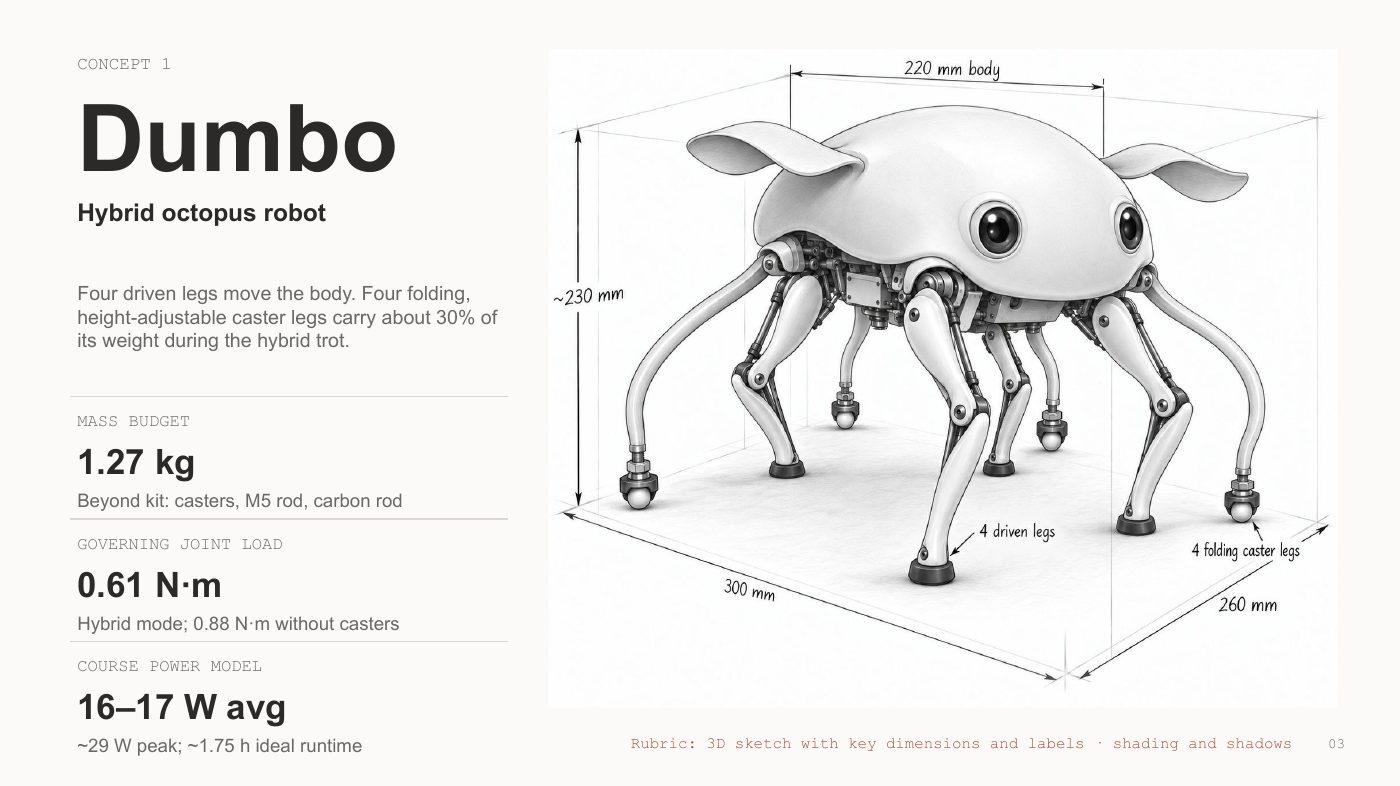
Dumbo, a hybrid octopus robot that walks on four legs and rolls on four retractable casters.
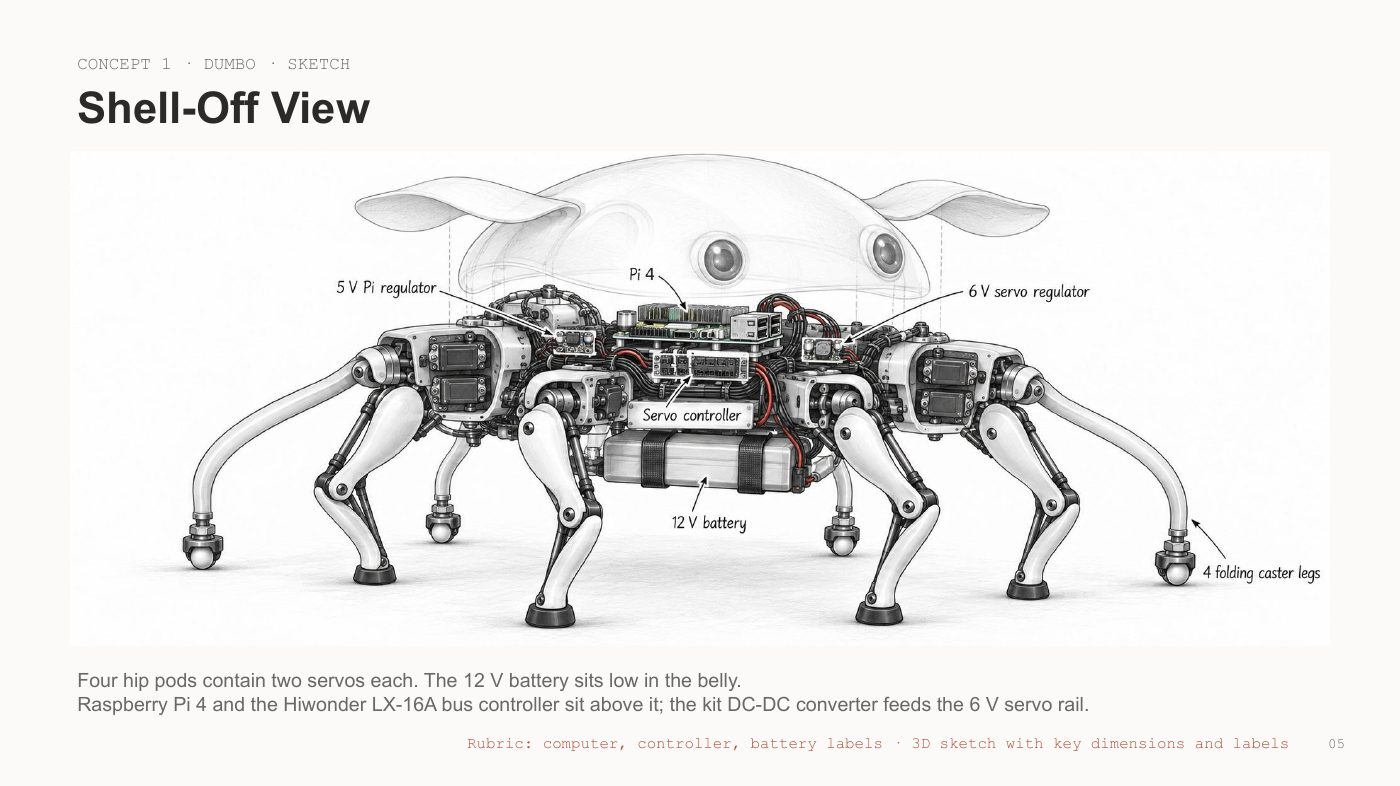
The course builds a walking robot from a fixed kit: eight Hiwonder LX-16A servos, a Raspberry Pi, and a 12 V pack limited to 30 W. I'm building Dumbo, which I worked through mass, joint torque, gait stability, power, and run time at the concept stage before moving it into CAD.
Dumbo in CAD
An internal endoskeleton carries the electronics and the shell is only a skin. The four caster arms ride on slides so they can lift clear of the ground and let Dumbo walk as a plain quadruped on carpet. Front and rear casters on each side share one mount at the side midpoint, and a minimum-distance check across twelve gait phases confirms the legs clear the casters everywhere.
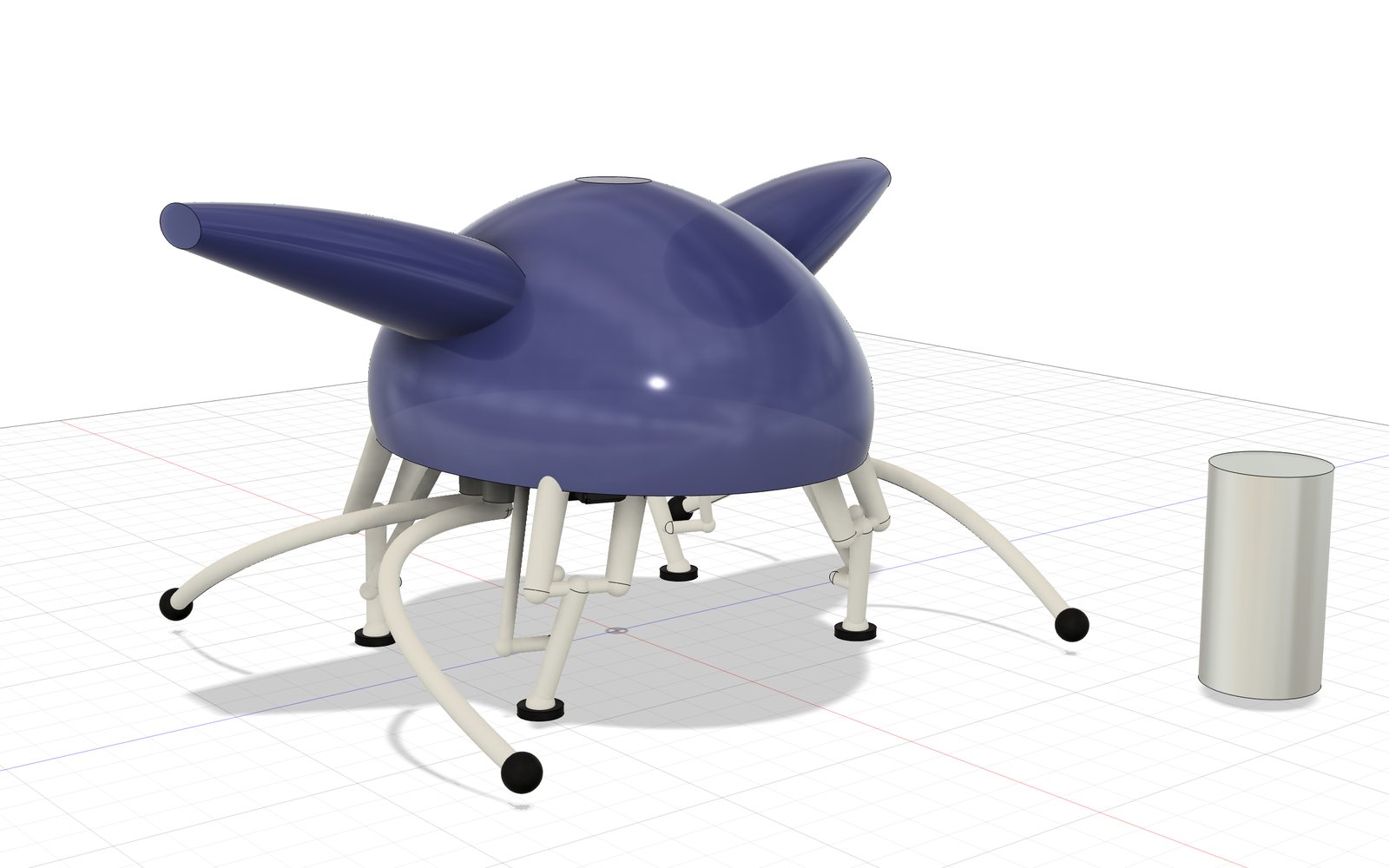
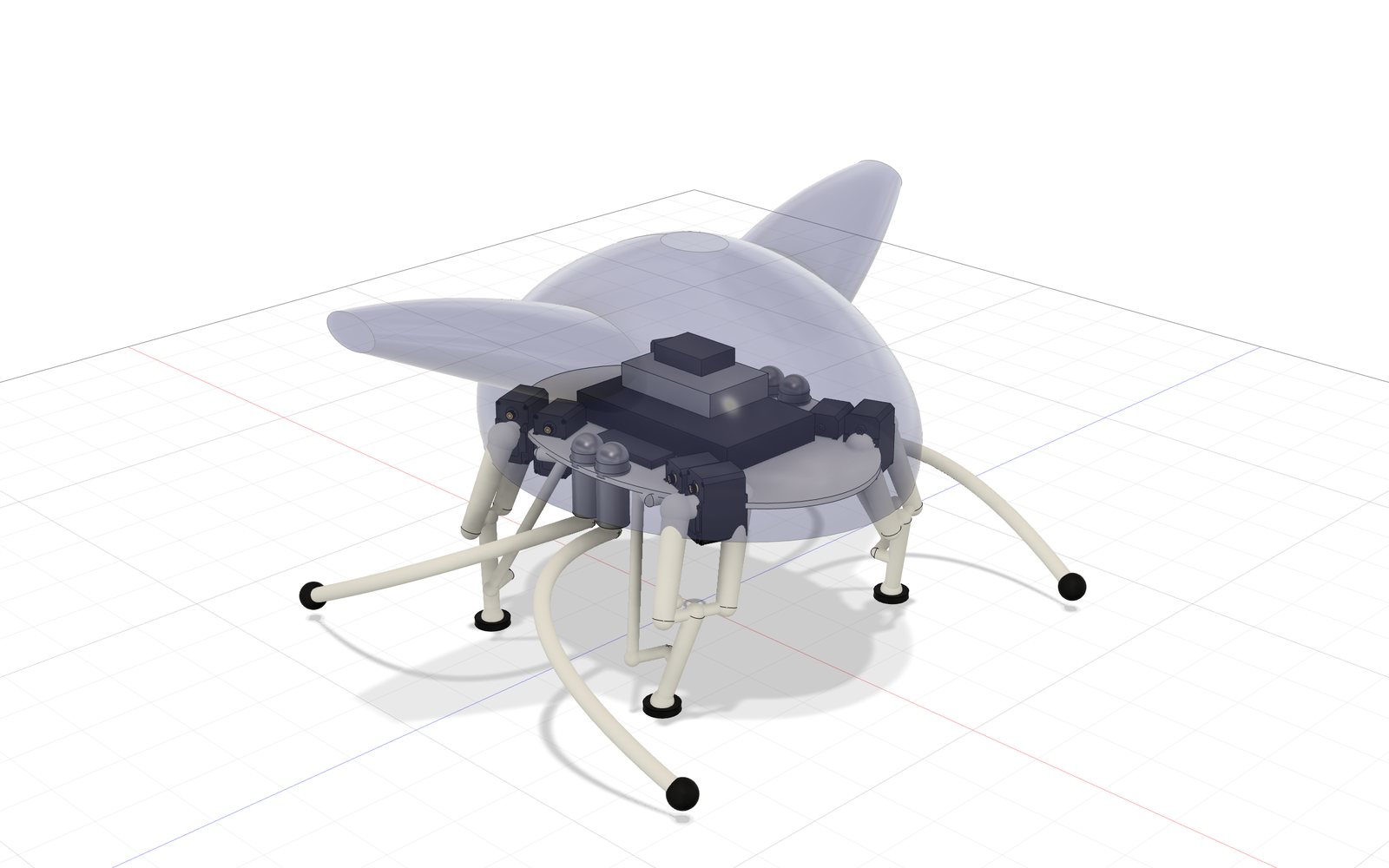
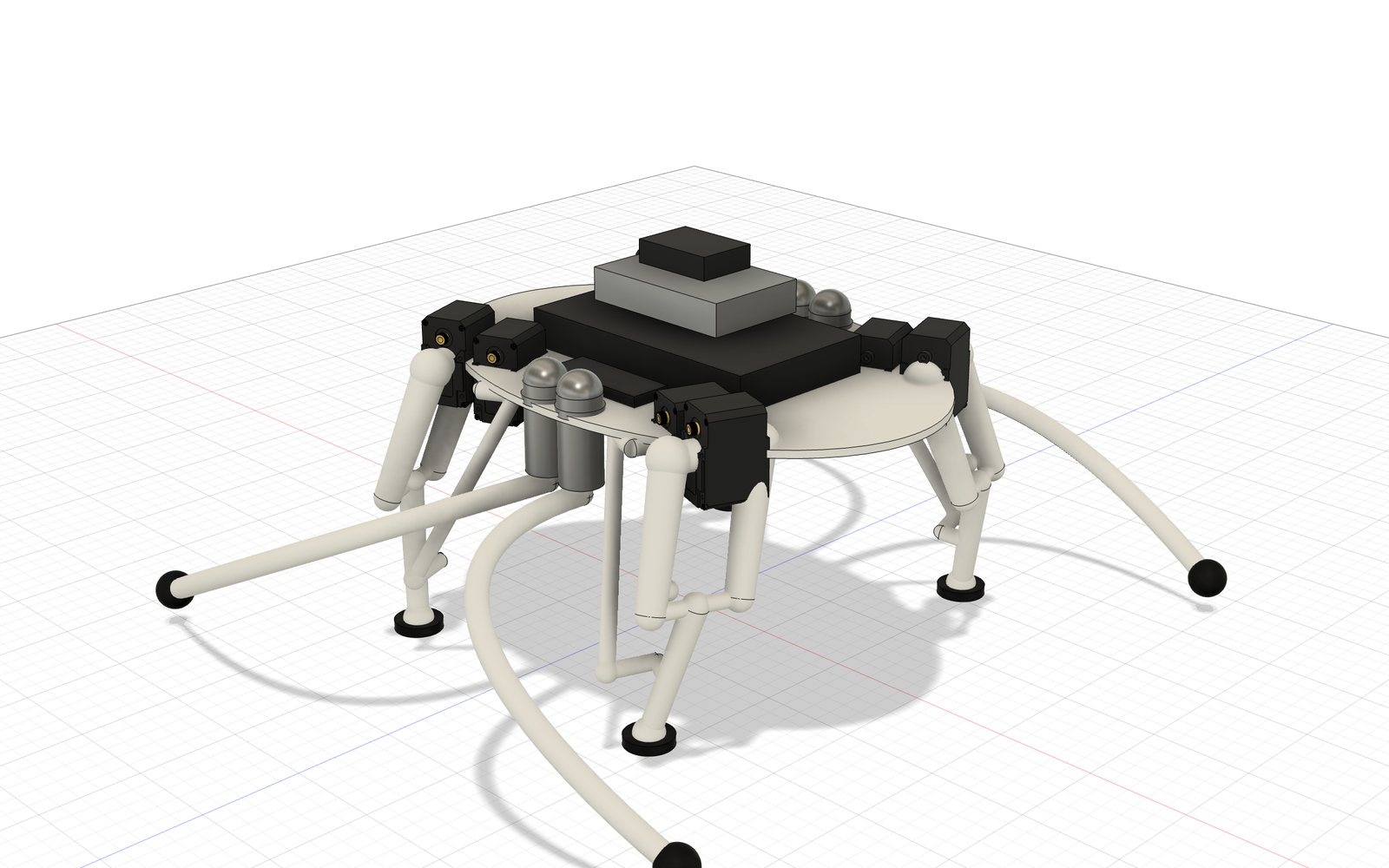
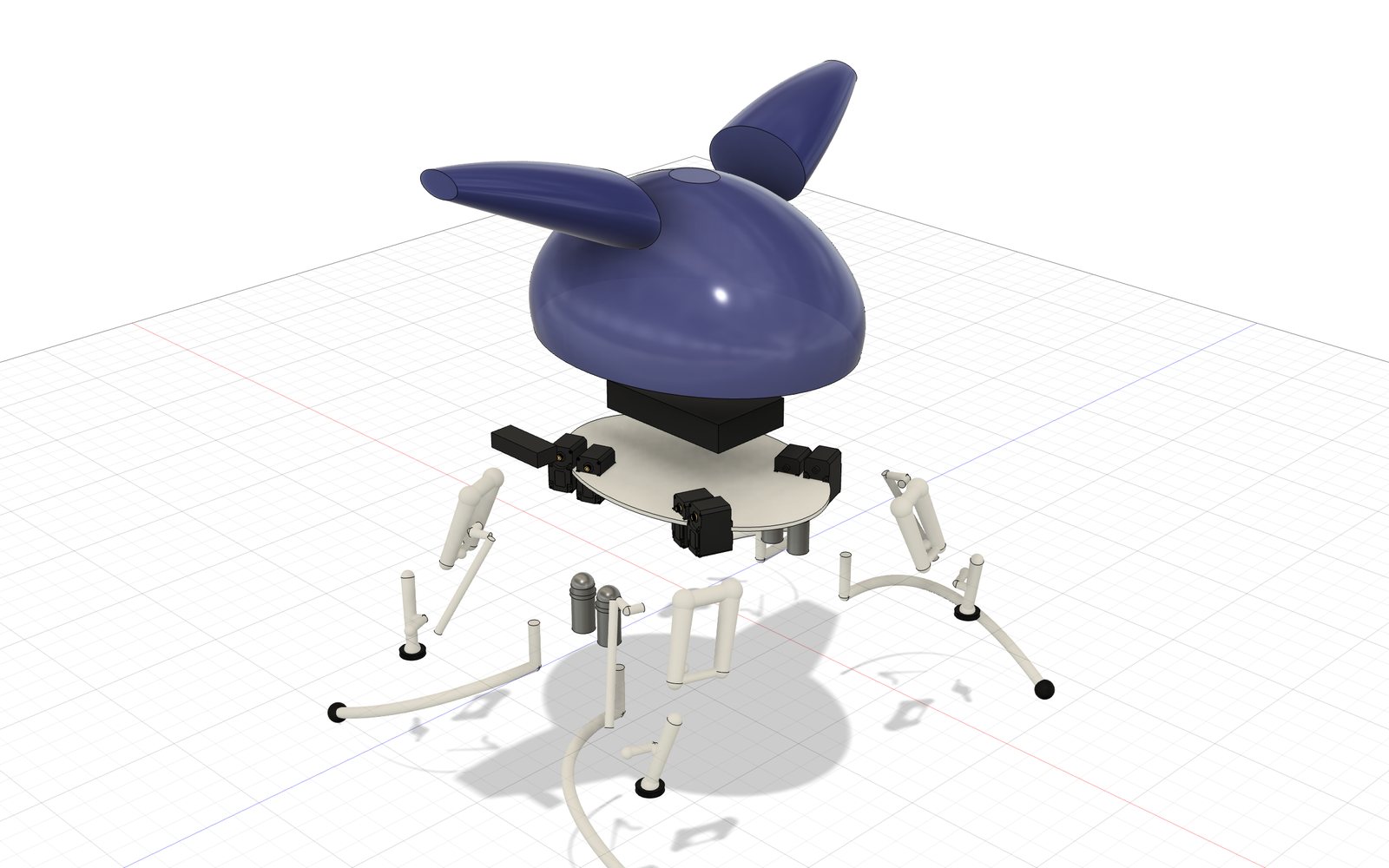
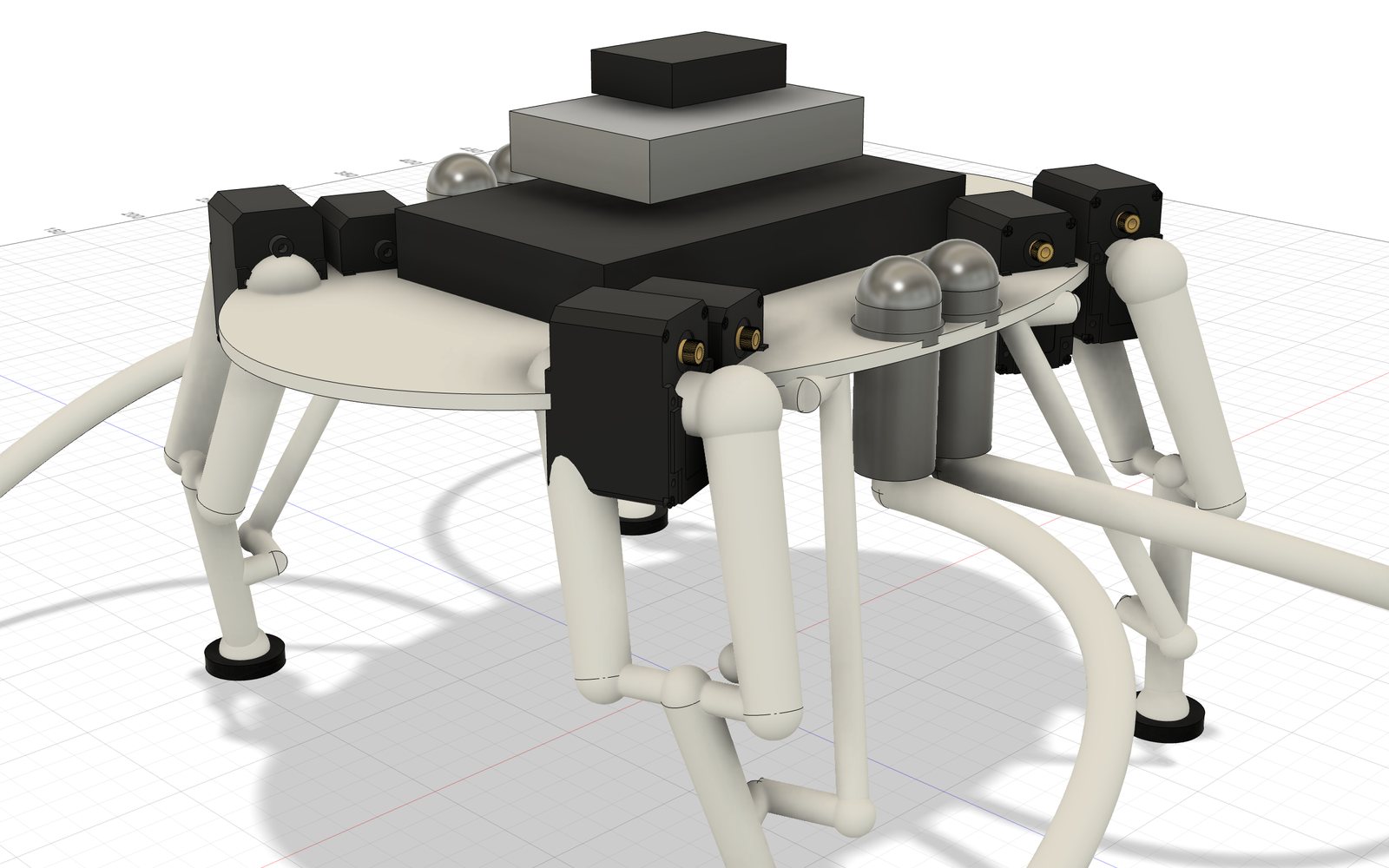
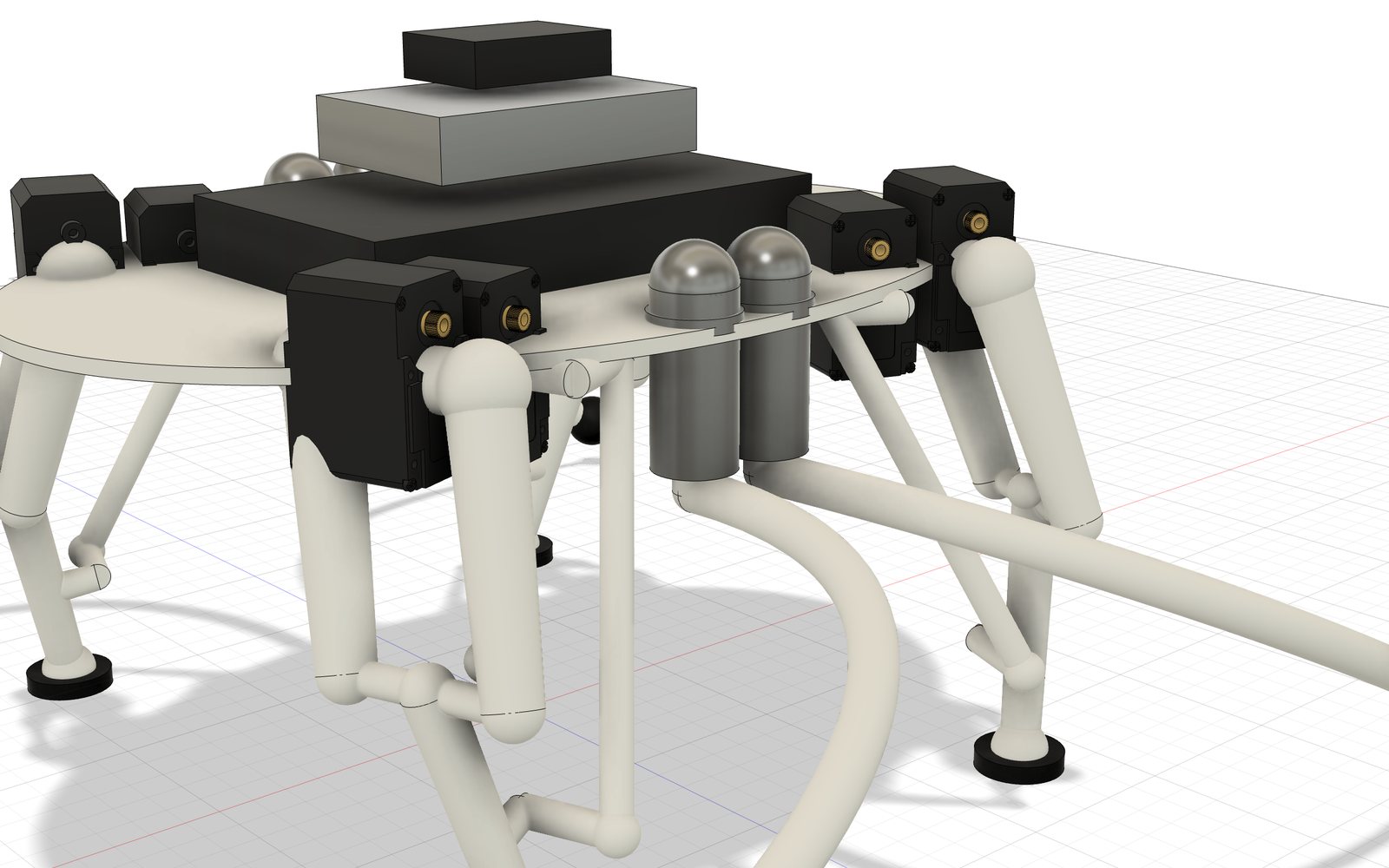
The fork thigh for the LX-16A servo is published on GrabCAD.
Design Basis
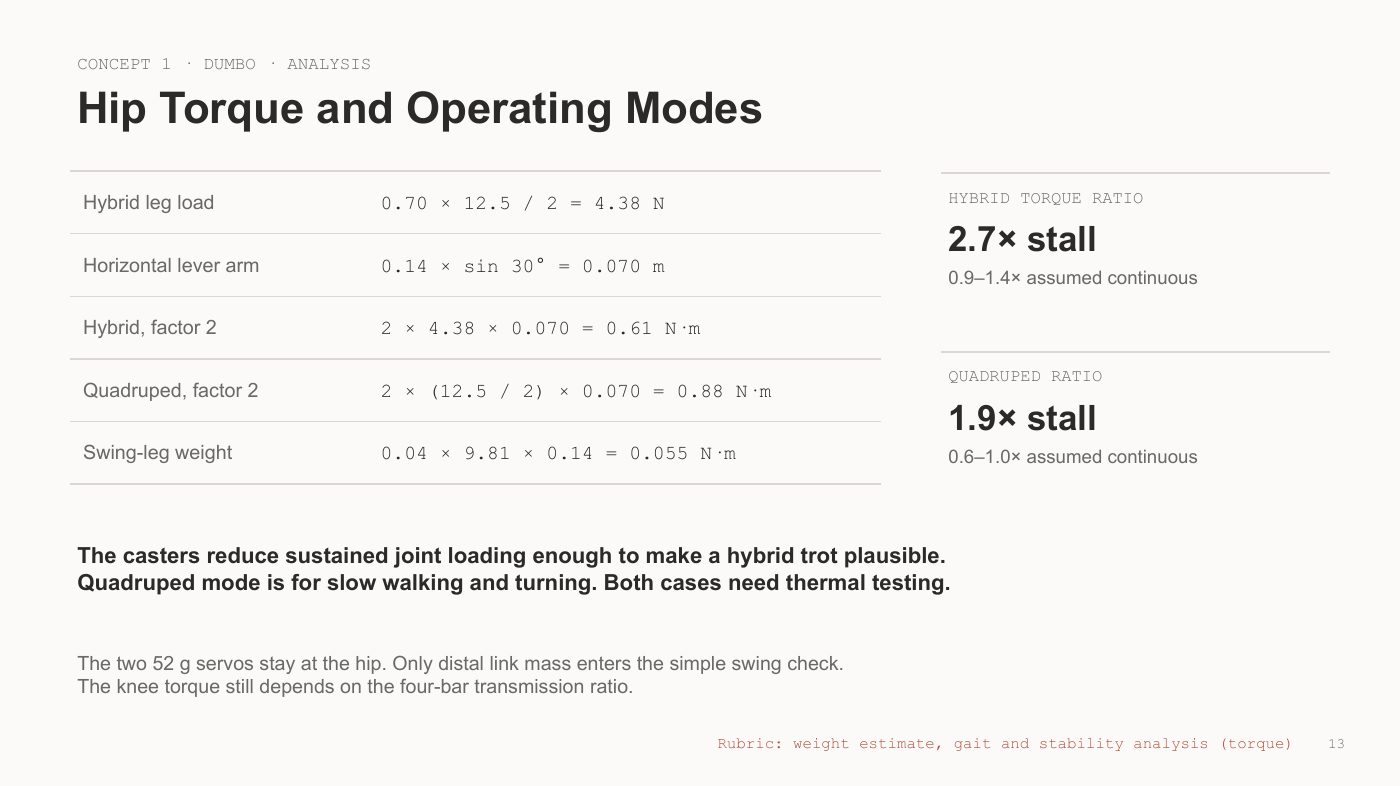
- Servo: 52 g, 1.67 N·m stall at 7.4 V, about 1.35 N·m on the 6 V bus
- Assumed continuous torque: 0.55–0.85 N·m
- Course limit of 1 A per motor, so 6 W each
- 12 V, 3000 mAh battery: about 29 Wh usable, 30 W output limit
- Estimated 16–17 W average, about 29 W peak, roughly 1.75 h ideal run time
- Every figure is a design assumption to be replaced by measurement once hardware exists
The Concept
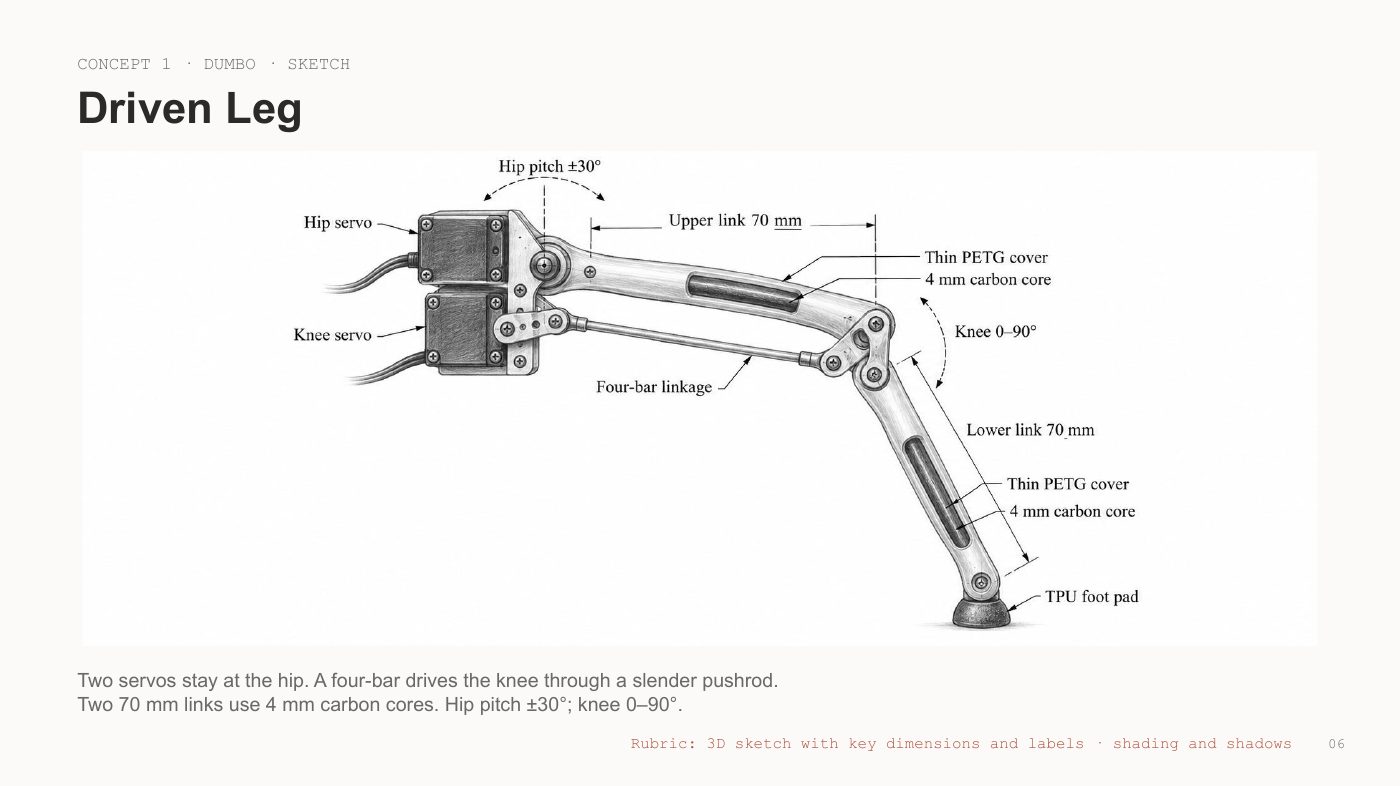
Four driven legs move the body while four folding, height-adjustable caster legs carry about 30% of the weight during a hybrid trot. Two servos sit at each hip; a four-bar drives the knee through a slender pushrod.
- 1.27 kg mass budget
- 0.61 N·m governing hip load (0.88 without casters)
- 2.7× stall margin in hybrid mode